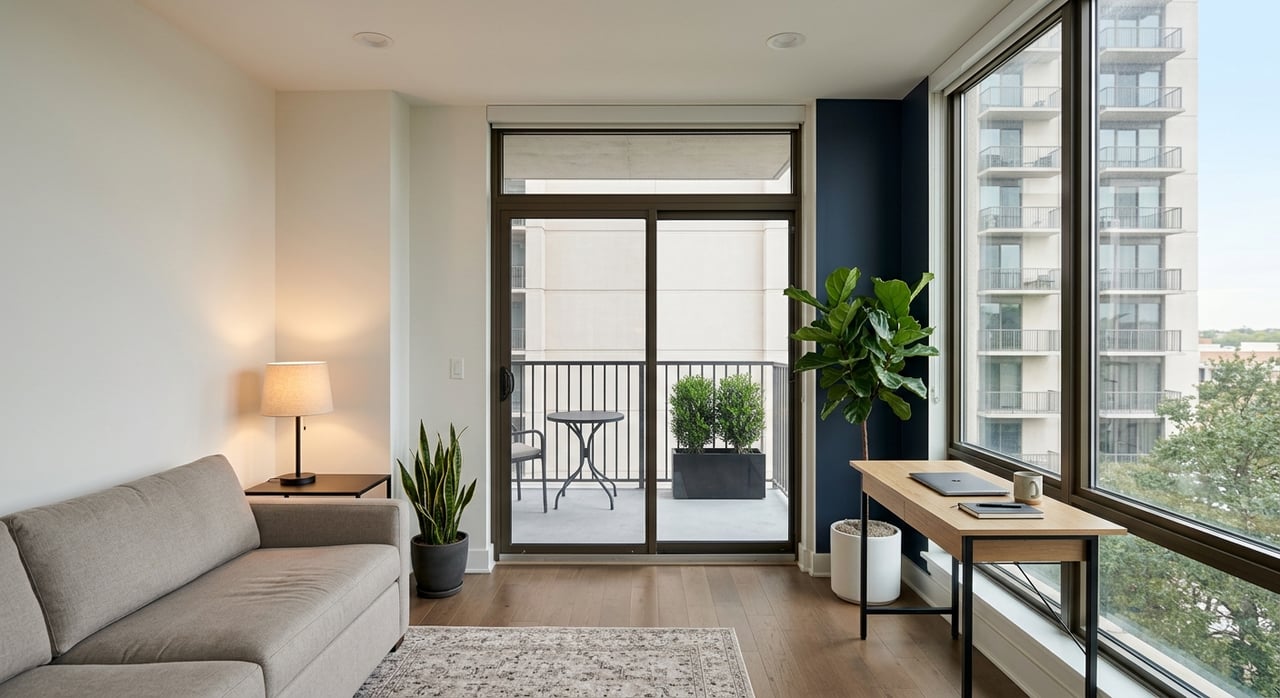
Ever wonder what your day would actually feel like in a Midtown Atlanta high-rise, beyond the glossy listing photos and skyline views? If you are weighing condo life in Midtown, you are probably trying to picture the rhythm of daily living, not just the square footage. This guide gives you a practical snapshot of what high-rise living in Midtown can look like, from mornings and commutes to amenities, errands, and evenings out. Let’s dive in.
Midtown Living at a Glance
Midtown functions as one of Atlanta’s most active live-work-play districts. Midtown Alliance says about 20,000 people live there, while more than 70,000 employees report to work in the district each day.
That mix shapes the pace of daily life. You are living in a place where homes, offices, restaurants, parks, arts venues, and transit all sit close together, which makes the neighborhood feel active throughout the day.
For high-rise residents, that density is a major part of the appeal. MARTA classifies Midtown Station as an Urban Core station, and high-rise construction is common around it, which helps explain why vertical living feels so natural in this part of Atlanta.
What Mornings Feel Like
In many Midtown towers, your day often starts with a quick elevator ride and a decision about how you want to begin the morning. You might head to a building gym, grab coffee a short walk away, or make your way to MARTA for an office commute.
Walking is central to the Midtown experience. Midtown Alliance says walking is the easiest way around the district, supported by 14 miles of new sidewalks, plus streetlights, trees, plazas, and pocket parks.
That means your morning may feel less car-dependent than it would in many other parts of metro Atlanta. Instead of backing out of a driveway and sitting in traffic right away, you are more likely to start the day on foot, in a lobby, on a sidewalk, or at the station.
Remote and Hybrid Work Fits Well
If you work from home at least part of the week, Midtown high-rise living can support that routine well. Several current residential buildings in the area market features like coworking space, conference or club rooms, fitness facilities, and concierge service.
Examples in Midtown include The Juniper and Reserve at Juniper, Axis Midtown, and Plaza Midtown. While amenities vary by building, the bigger point is that many towers are designed to help residents handle work, deliveries, exercise, and downtime without leaving the property.
That convenience can matter if you are balancing calls, meetings, and errands in the same day. Instead of treating home as only a place to sleep, many Midtown towers are set up to support a more flexible daily routine.
The Tradeoffs of Vertical Living
High-rise life comes with real perks, but it also has a rhythm of its own. Better views, shared amenities, and a central location often come with more dependence on elevators, lobbies, garages, and package systems.
For some buyers, that tradeoff feels worth it right away. For others, it helps to think honestly about whether you like the structure of building access, elevator timing, and shared spaces as part of everyday life.
This is one reason Midtown condos can feel very different from townhomes or single-family homes, even at a similar price point. You are not just choosing a home. You are choosing a daily system.
Common Midtown Tower Amenities
A lot of Midtown buildings market a similar set of lifestyle features, even though the finish level and overall feel can vary. These amenities often focus on convenience, views, and making day-to-day living smoother.
Common features highlighted in current Midtown communities include:
- Concierge service
- Fitness centers
- Pools and amenity decks
- Rooftop lounges or courtyards
- Club rooms or conference space
- Package retrieval systems
- Parking garages or underground parking
- Pet-focused amenities
- Street-level retail in mixed-use buildings
- Skyline or park views
For example, Luxe Midtown highlights Piedmont Park views, floor-to-ceiling windows, a pool, grilling area, club room, fitness center, and 24-hour concierge. Juniper & 5th lists underground parking, a pet spa, conditioned storage, 24-hour package retrieval, a fitness center, pool, clubroom, and rooftop lounge.
Plaza Midtown reflects another common pattern in the neighborhood: mixed-use high-rise living. It includes street-level retail, 24-hour concierge and courtesy officers, a clubhouse, fitness center, outdoor heated pool, and rooftop park.
Midtown Is Built for Car-Light Living
One of the clearest differences between Midtown and many other Atlanta neighborhoods is how realistic it can be to live with less driving. Midtown Alliance says the district has four MARTA rail stations, bus service, local circulators, well-lit sidewalks, expanding bike lanes, and bicycle racks.
Just as important, Midtown Alliance says the easiest way around Midtown is on foot. In the office core, 96% of office buildings are within a 6-minute walk from a transit station.
For residents, that means a short walk to rail is often part of everyday life. The Red and Gold lines serve North Ave, Midtown, and Arts Center stations, and MARTA also operates 13 Midtown-area bus routes, along with shuttle options like the free Tech Stinger and the Atlantic Station shuttle.
Airport access is another practical advantage. MARTA’s Midtown Station page currently lists about a 20-minute average travel time to the airport, which gives you a useful sense of how connected the neighborhood can feel for frequent travelers.
Evenings Stay Close to Home
One of the best parts of Midtown high-rise living is that your evening options do not have to start with a long drive. Midtown Alliance says the district has more than 150 dining options, along with 25 arts and cultural venues, more than 30 permanent performing arts groups, and 22 entertainment facilities.
That concentration changes how you use your time. Dinner, a show, a museum visit, or a walk through the park can all fit into a weeknight more easily when they are nearby.
Midtown is also home to some of Atlanta’s best-known cultural destinations. The Woodruff Arts Center includes the Alliance Theatre, Atlanta Symphony Orchestra, and High Museum of Art, while nearby attractions also include the Fox Theatre, Piedmont Park, and the Atlanta Botanical Garden.
Green Space Still Plays a Big Role
Even though Midtown is known for density and towers, green space remains a meaningful part of daily life. Piedmont Park and the Atlanta Botanical Garden give the area a strong outdoor element that balances the urban feel.
That matters if you want city living without feeling boxed in all the time. A neighborhood can feel very different when walks, park time, and outdoor breaks are part of the normal routine instead of a special trip.
For many buyers, this is where Midtown stands out. You get an urban core lifestyle, but you still have access to major open space nearby.
Why Midtown High-Rise Life Appeals to Buyers
For relocating buyers, Midtown can make Atlanta feel easier to learn quickly. Work, transit, dining, culture, and recreation are compressed into a small radius, which can shorten the adjustment period after a move.
For intown move-up buyers, the draw is often efficiency and lifestyle. You may be trading yard work and longer drives for a more streamlined day, stronger walkability, and amenities that support how you actually live.
The biggest lifestyle shift is simple: Midtown high-rise living is not just about living above the city. It is about putting more of your routine within reach.
Is Midtown High-Rise Living Right for You?
If you value walkability, transit access, building amenities, and easy access to dining and culture, Midtown may check a lot of boxes. If you prefer privacy, direct outdoor space, and fewer shared building systems, a different intown option may be a better fit.
This is where clear guidance matters. The right condo is not just about finishes or floor level. It is about whether the building, location, and daily flow align with your priorities and budget.
If you are comparing Midtown high-rises, want help weighing lifestyle tradeoffs, or need a smart local strategy for buying or selling intown, Lauren Bowling can help you make a calm, informed move.
FAQs
What is daily life like in a Midtown Atlanta high-rise?
- Daily life often centers on walking, elevator access, nearby dining, transit, and shared building amenities like gyms, pools, concierge service, and package systems.
Is Midtown Atlanta good for car-light living?
- Yes. Midtown Alliance says the easiest way around the district is on foot, and the area also has MARTA rail stations, bus service, local shuttles, bike infrastructure, and well-lit sidewalks.
Do Midtown Atlanta high-rises work well for remote workers?
- Many do. Some current Midtown buildings market coworking areas, club or conference rooms, fitness facilities, and concierge services that can support remote or hybrid schedules.
What kinds of amenities do Midtown Atlanta condo towers usually offer?
- Common amenities include concierge service, fitness centers, pools, rooftop spaces, club rooms, package retrieval systems, parking, pet amenities, and in some cases street-level retail.
How close is Midtown Atlanta to the airport by MARTA?
- MARTA’s Midtown Station page currently lists about a 20-minute average travel time to the airport.
What makes Midtown Atlanta different from other intown neighborhoods?
- Midtown stands out for how tightly it combines high-rise housing, transit access, dining, arts venues, entertainment, and green space within a compact, walkable area.
