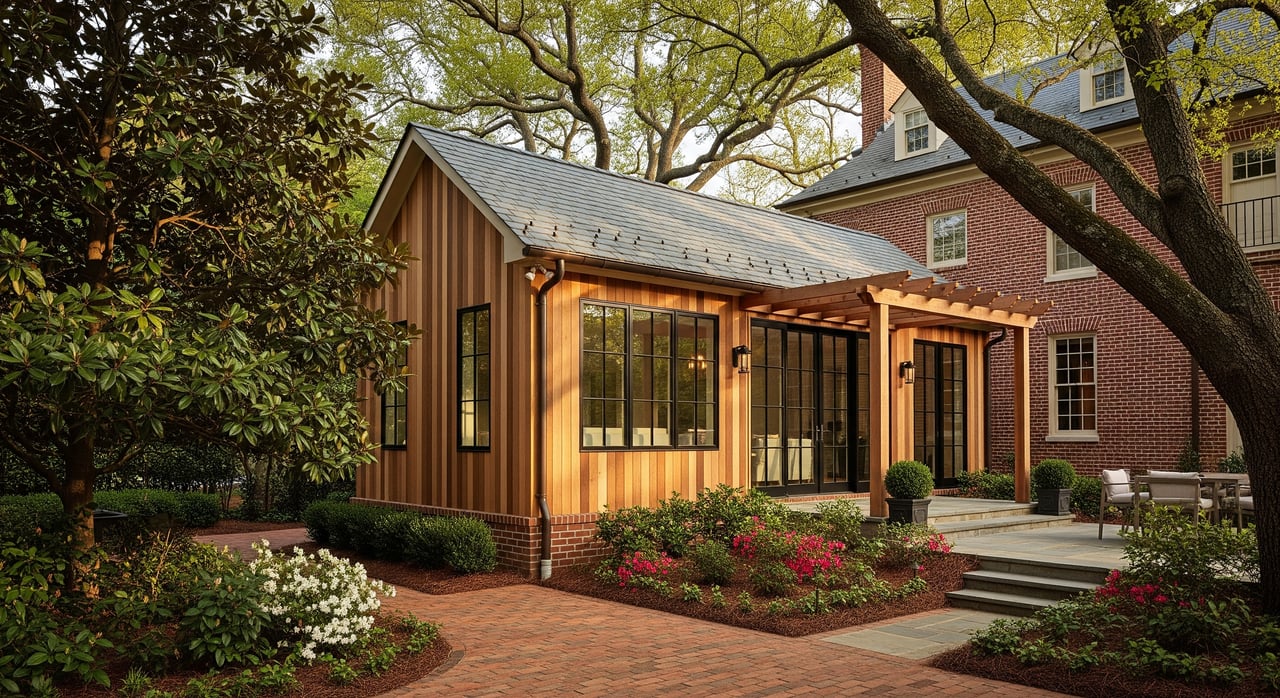
Thinking about adding a backyard cottage or converting a garage in Druid Hills? You are not alone. Many owners want flexible space for family, rental income near Emory and Decatur, or a private home office. In a historic neighborhood, though, you need a clear plan. This guide walks you through what to check first, how design review works, practical cost and timeline notes, and how an ADU could affect resale. Let’s dive in.
ADU basics in Druid Hills
An accessory dwelling unit is a smaller, secondary home on the same lot as your primary house. It could be a finished basement, an attic apartment, an addition, a carriage house over a garage, or a detached backyard cottage. ADUs can serve family, long-term tenants, or a caregiver, with short-term rentals subject to local rules.
Druid Hills has larger lots, a strong tree canopy, and historic character. Those features create opportunity and responsibility. You may have space for a detached cottage, but you must also respect preservation norms, stormwater controls, and tree protections.
Start with zoning and historic status
Confirm zoning with DeKalb County
Your first step is to verify your parcel’s zoning through DeKalb County Planning. Ask specifically if an ADU is allowed by right or requires a variance. Also request setback, lot coverage, height limits, floor-area ratio, and whether your lot sits in a floodplain or special overlay. These details determine what is possible before you spend on design.
Understand National Register vs local rules
Many Druid Hills homes are listed in or near the National Register Historic District. National Register listing alone does not control what a private owner can change. Local historic district or conservation overlay rules, if they apply to your property, can require design review for new construction and additions. Confirm whether your lot is subject to local preservation review and identify the review body and submission requirements.
Check covenants and associations
Review your deed covenants for any limits on secondary units or rentals. If a homeowners’ association or neighborhood group is active, ask about design guidelines and informal expectations. Aligning early reduces friction later.
Evaluate site and utility constraints
Lot size, setbacks, stormwater, and trees
Map your buildable area after setbacks. In older neighborhoods, stormwater management can add cost, so ask about runoff controls early. Druid Hills’ mature trees are an asset and a constraint. Tree protection zones can limit grading and dictate where you place foundations and utility trenches.
Sewer, water, electrical, and gas
Confirm if you are on public sewer or a septic system. Septic capacity can limit or prevent an ADU. Review water pressure and meter needs, electrical service size, and whether a separate meter is advisable. If you plan gas appliances, check line capacity and routing.
Parking and safe access
Ask the county about parking requirements for ADUs and any exemptions. Plan for a safe, code-compliant path to the ADU entrance, emergency access, and driveway turning space, especially on narrow or shared drives.
Choose the right ADU type
Interior conversion
A finished basement or attic apartment often has the least exterior impact and can avoid some design conflicts with historic exteriors. Conversions can be faster if structure and egress are straightforward. Plan for separate entries, sound control, and natural light.
Attached addition
An attached ADU can blend with your home when designed well. Pay attention to massing, rooflines, and materials so the addition reads as compatible and subordinate to the main house. Visibility from the street and front-yard setbacks are common review points in historic contexts.
Detached cottage or garage apartment
A backyard cottage or a suite over a garage offers privacy and strong rental potential. These options can draw the most design scrutiny. Height, placement, and visibility from the primary street are critical. Place detached structures toward the rear yard when possible and maintain the historic streetscape.
Preservation-friendly design tips
- Match roof pitches and proportions to the primary house.
- Use compatible exterior materials and window patterns.
- Keep new construction visually subordinate to the main home.
- Protect root zones and plan site work to preserve mature trees.
- Minimize visibility from the front street where feasible.
Costs, timeline, and financing
Budgets vary based on type, finishes, site work, and utility upgrades. Conversions often cost less and move faster than ground-up detached builds. Historic or conservation review can add months and may require design revisions, so build extra time into your plan. Construction staging on tight lots can also affect duration and cost.
Financing options typically include home equity loans, construction loans, renovation lines of credit, cash-out refinances, or cash. Lenders may view your property differently once a secondary unit exists. Speak with a mortgage professional early to understand terms and appraisal methods for properties with ADUs.
Rentals, taxes, and insurance
If allowed, long-term rentals can offset carrying costs. Short-term rentals are often regulated differently than long-term leases, and some covenants prohibit them. Confirm the local rules before you plan on short-term rental income.
A permitted ADU is an improvement and will likely increase assessed value. Contact the DeKalb County Tax Assessor to understand how improvements are assessed and whether rental use affects your classification. If you will rent the unit, talk to your insurance agent about landlord coverage, liability limits, and how separate or shared utility meters affect your policy.
Step-by-step plan to move forward
Confirm zoning and status. Contact DeKalb County Planning with your parcel ID to verify ADU permissibility and any overlay districts.
Check historic and neighborhood rules. Determine if your property is in a local historic district or conservation overlay and learn the design standards and review process. Review deed covenants and any HOA rules.
Order a current survey. Make sure it shows setbacks, easements, topography, and existing structures. This is the base for any site plan.
Assess the site. With an architect or contractor, review setbacks, buildable area, tree impacts, stormwater needs, and utility capacity, including sewer or septic.
Choose an ADU type. Weigh interior conversion vs attached or detached. Consider privacy, visibility from the street, and likely review hurdles.
Get preliminary drawings and estimates. Obtain multiple bids and expect revisions after preservation feedback.
Plan financing and holding costs. Discuss loan options with a lender and ask the tax assessor about likely assessment changes.
Submit for review and permits. Prepare elevations, materials, and a site plan for historic/design review if required, then apply for building, mechanical, electrical, and plumbing permits.
Build with preservation in mind. Protect trees and maintain neighbor access. Expect inspections at milestones.
Resale and appraisal outlook
A well-executed ADU can widen your future buyer pool. Multi-generational families, buyers seeking rental income, and those wanting flexible guest space often view ADUs as a plus. Rental income potential can help buyers visualize affordability.
There are cautions. If an ADU crowds the yard, reduces parking, or clashes with the home’s character, it can reduce appeal in a preservation-oriented market. Appraisers rely on comparable sales. In areas with few ADUs, adjustments are less predictable. A local appraiser and a real estate advisor can help you set expectations for value.
Neighborhood relations and smoother approvals
Engage neighbors and local preservation groups early. Share a simple concept sketch that shows rear-yard placement, compatible materials, and tree protection. Thoughtful outreach can surface helpful feedback and ease review.
When to bring in professionals
- Architect or preservation architect for design and review submittals.
- General contractor with ADU and older-home experience.
- Surveyor or civil engineer for site plan and stormwater.
- Historic preservation consultant or attorney if rules are complex.
- Real estate appraiser and market-savvy agent for resale insights.
- Mortgage lender for construction and renovation financing.
- Insurance agent for coverage changes and liability planning.
The bottom line for Druid Hills owners
ADUs can add flexibility, income potential, and long-term value when they are designed with care and approved through the proper channels. In Druid Hills, success starts with clear zoning confirmation, an early preservation strategy, and a design that respects the neighborhood’s character. If you build with sensitivity to trees, setbacks, and streetscape, you set yourself up for smoother approvals and stronger resale.
If you are weighing options or want a reality check on costs and value, connect with a local advisor who knows the neighborhood. For calm, numbers-led guidance and a plan tailored to your property, reach out to Lauren Bowling.
FAQs
Can I build an ADU on my Druid Hills lot?
- Possibly. It depends on your zoning and any local historic district or deed restrictions. Start by confirming rules with DeKalb County Planning and any preservation review body.
Does National Register status prevent changes?
- No. National Register listing alone does not regulate private alterations, but a local historic district or conservation overlay can require design review and approvals.
How long do approval and construction take?
- Timelines vary. Plan for several months for design and review, longer if historic review is required, plus several months for construction and inspections.
Will an ADU raise my property taxes?
- Likely yes. A permitted improvement typically increases assessed value. Contact the DeKalb County Tax Assessor to understand how your project may be assessed.
Can I use an ADU for short-term rentals?
- It depends on local rules and any covenants. Confirm DeKalb County and neighborhood regulations before planning a short-term rental strategy.
Who should I contact first to get started?
- Obtain a current survey, then call DeKalb County Planning about ADU permissibility and check with the local historic preservation office or neighborhood association about design standards.
