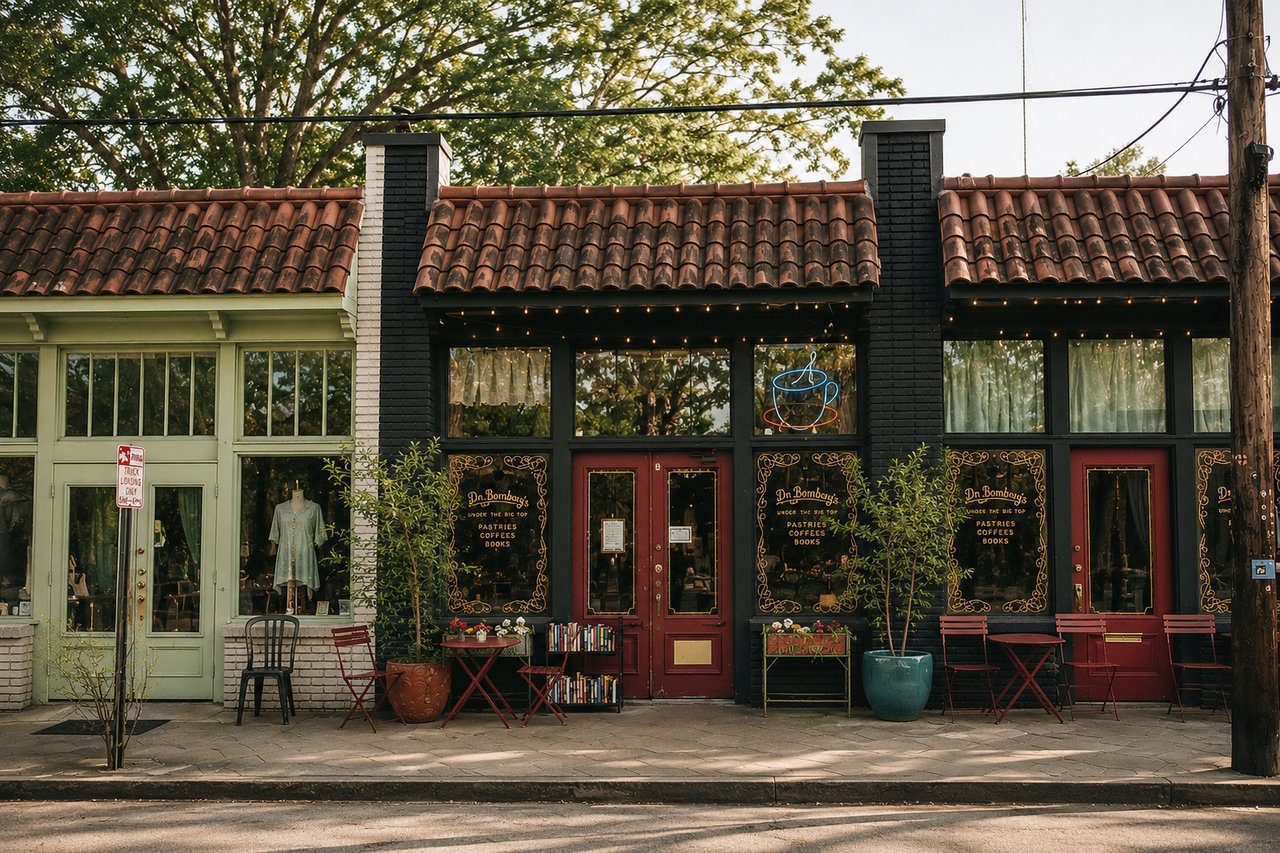
If you only have one weekend to figure out whether Candler Park fits your life, you can still learn a lot fast. This neighborhood has a distinct rhythm, but it also changes block by block in ways that matter when you are buying. In this guide, you’ll learn how to scout Candler Park efficiently, what streets to pay attention to, and how to think about housing style and price before you book a showing. Let’s dive in.
Start With the Big Picture
Candler Park is both the name of the neighborhood and the park at its center. It is generally understood as an east-side Atlanta neighborhood, with historic roots tied to the older community of Edgewood and a residential pattern that grew around the park developed in 1922.
For a weekend buyer, that dual identity matters. You are not just evaluating homes here. You are also evaluating how the park, nearby commercial areas, and busier edge streets shape day-to-day living.
The neighborhood organization places Candler Park in NPU-N, alongside several nearby east-side neighborhoods. Freedom Park defines the northwest boundary, and the main business areas include Little Five Points, DeKalb Avenue, and two commercial nodes along McLendon.
Why Candler Park Feels Different
Candler Park reads as a historic residential neighborhood first and a shopping district second. The area is noted for historic residential architecture, mature yard patterns, and established street landscaping, which gives many blocks a settled, classic intown feel.
At the same time, the feel can shift quickly. The neighborhood master plan notes that McLendon, Euclid, Oakdale, and Clifton function as cut-through streets, while Moreland and DeKalb create harder edges. That means one home may feel tucked away, while another just a few blocks over may feel more connected to through-traffic and commercial activity.
If you are buying with resale in mind, this is worth paying close attention to. In a neighborhood like Candler Park, micro-location can affect noise, traffic patterns, and the overall experience of the block.
Build a Smart Weekend Scouting Loop
If you want to get a strong first impression in a single day, follow a simple loop. Start on foot, then drive the interior streets, and finish by comparing the quieter core with the busier commercial edges.
Stop 1: Walk the Park Core
Start at Candler Park, located at 1500 McLendon Ave. NE. The City of Atlanta lists it as a 55.3-acre community park, and there is also a playground there, which makes it a useful first stop whether you are moving solo, as a couple, or with children.
City parks are open daily from 6:00 a.m. to 11:00 p.m., so you can easily plan a morning walk or an early evening visit. That flexibility is helpful if you are trying to fit scouting around open houses.
While you are there, pay attention to the pace of the neighborhood. Notice who is using the park, how the nearby streets feel, and how close different homes are to the activity around the park itself.
The city also lists Candler Park Golf Course at 585 Candler Park Dr. NE. Even if golf is not part of your lifestyle, this helps you understand how open space is woven into the neighborhood experience.
Stop 2: Grab Coffee on McLendon or DeKalb
After the park, head to one of the nearby breakfast or coffee spots. Sean’s Candler Park at 1394 McLendon Ave. NE offers weekend hours with coffee and fresh food, and Flying Biscuit at 1530 DeKalb Ave. NE remains known as the original cafe location with breakfast, brunch, and lunch served all day.
These are practical scouting stops because they put you directly on streets you are likely to compare later. You can sit for a few minutes, watch traffic, and get a feel for how active the area is at different times of day.
If you are relocating to Atlanta, this part of the visit is especially useful. It gives you a quick sense of whether Candler Park feels more relaxed, more active, or more connected than other intown neighborhoods on your shortlist.
Stop 3: Drive the Interior Streets Slowly
Once you have walked the core, get in the car and do slow drive-bys through the residential interior. Some of the most useful street names to know are McLendon, Candler Park Drive, Oakdale, Euclid, and Clifton.
The neighborhood master plan highlights key intersections including McLendon and Oakdale, McLendon and Candler Park Drive, McLendon and Clifton, Euclid and Oakdale, Euclid and North, plus the Moreland and DeKalb gateways. These are the spots where you will start to notice which streets feel quieter and which function more like connectors.
Clifton is especially notable because it is wider, reflecting its history as a former streetcar route. That kind of detail helps explain why some stretches feel more residential while others feel more open or more traveled.
Stop 4: Compare Little Five Points and Freedom Park
Finish your loop by visiting one of the neighborhood’s more active edges. Little Five Points is the most obvious nearby commercial district, and its directory currently includes places like Aurora Coffee, The Porter Beer Bar, Sevananda Natural Foods Market, Psycho Sisters, Abbadabba’s, and Wrecking Bar Brewpub.
The district is described as an arts-and-shopping area that developed as one of Atlanta’s early commercial centers. For a buyer, the key takeaway is not just what is there, but how close you want to live to that energy.
If your schedule allows, add a Freedom Park loop too. The neighborhood organization describes Freedom Park as one of Candler Park’s two major parks and a major linear greenspace with trails that connects the area to nearby east-side districts.
This stop is helpful because it sharpens the contrast between the quieter interior blocks and the more active perimeter areas. If lifestyle fit matters as much as square footage, this comparison can save you time.
Understand the Housing Mix
Candler Park is mostly shaped by older detached homes and duplexes. According to the neighborhood zoning page, much of the area is zoned R-4 single-family and R-5 duplex, which supports the neighborhood’s predominantly residential character.
The master plan also identifies three primary commercial areas: Little Five Points, DeKalb Avenue, and the two McLendon nodes. In practical terms, that means you are more likely to see denser or mixed-use options near those edges, while the interior remains more consistently residential.
This is useful when setting expectations. If you want a classic intown house with historic character, the neighborhood can offer that. If you want to be very close to shops or busier corridors, the housing experience may look a little different depending on exactly where you focus.
What Price Range Should You Expect?
Public market snapshots point to Candler Park as a firmly upper-intown market. Zillow reports a typical home value of $752,653 and a median list price of $691,467 as of May 31, 2026, with 24 homes for sale.
Redfin reports a median sale price of $874,706 for the three months ending May 2026, along with a median sale price per square foot of $413, a median 14 days on market, and a 102.0% sale-to-list ratio. Those numbers suggest buyers should be prepared for a competitive environment when well-positioned homes hit the market.
At a practical level, many buyers should expect a working search band in roughly the high-$600,000s to high-$800,000s. Smaller homes or homes needing more updates may come in below that range, while larger renovated homes may land above it.
That is not a fixed rule, and your real search range should depend on condition, location within the neighborhood, and current inventory. But for a weekend house-hunter, it is a useful starting framework.
How to Evaluate a Block Fast
When you only have limited time, it helps to know what to watch for. In Candler Park, block-level differences matter enough that two homes with similar price tags can feel very different in person.
Use this quick checklist as you scout:
- How close is the home to McLendon, Moreland, or DeKalb?
- Does the street feel like a connector or a quieter interior block?
- Are you near the park core, a commercial node, or a neighborhood edge?
- Does the home appear more updated or more original than nearby comparables?
- How much activity do you notice on foot and by car during your visit?
If possible, visit at two different times in the same day. A street that feels peaceful in the morning may feel more active later, especially near commercial areas or key intersections.
If You’re Using MARTA
If you are planning a scouting trip without a car, Candler Park is still manageable. MARTA lists Edgewood/Candler Park Station on the Blue and Green lines, with a surface parking lot on the DeKalb Avenue side.
MARTA also notes that daily parking is free, though overnight parking is not allowed. That setup makes it easier to combine transit, a neighborhood walk, and one or two open houses without spending much of your weekend on logistics.
For relocating buyers, that can be a major advantage. You can test the area in a way that feels closer to real life, not just a one-time drive-through.
A Better Way to House-Hunt in Candler Park
The smartest way to shop Candler Park is to balance lifestyle and numbers. The neighborhood offers historic character, major park access, and proximity to active commercial areas, but the right fit often comes down to street-by-street tradeoffs.
That is why a quick online search is rarely enough here. If you walk the park core, compare the interior blocks, and study the edges around Little Five Points, Freedom Park, Moreland, and DeKalb, you will leave with a much clearer sense of where your budget and preferences align.
If you want help narrowing your search, building a realistic buying strategy, or comparing Candler Park with other intown neighborhoods, Lauren Bowling can help you approach the process with clarity and confidence.
FAQs
What is Candler Park known for in Atlanta?
- Candler Park is known for its historic residential character, its central city park, and its location near active east-side commercial areas like Little Five Points and McLendon Avenue.
What should homebuyers do first when visiting Candler Park?
- Homebuyers should start by walking the park core, then drive the interior streets, and finally compare the quieter residential blocks with busier edges near Freedom Park, DeKalb Avenue, and Little Five Points.
What types of homes are common in Candler Park?
- Candler Park is mostly made up of older single-family homes and duplexes, with some denser or mixed-use housing closer to commercial corridors.
What price range should buyers expect in Candler Park?
- Based on current public market snapshots, many buyers should expect a practical search range from the high-$600,000s to the high-$800,000s, with exact pricing varying by size, condition, and location.
What streets matter most when scouting Candler Park homes?
- Key streets to watch include McLendon, Candler Park Drive, Oakdale, Euclid, and Clifton, since they help reveal which areas feel quieter and which function more as connectors.
Can you visit Candler Park without driving?
- Yes. MARTA’s Edgewood/Candler Park Station on the Blue and Green lines makes it possible to visit the neighborhood, walk parts of it, and reach open houses with less hassle.
